
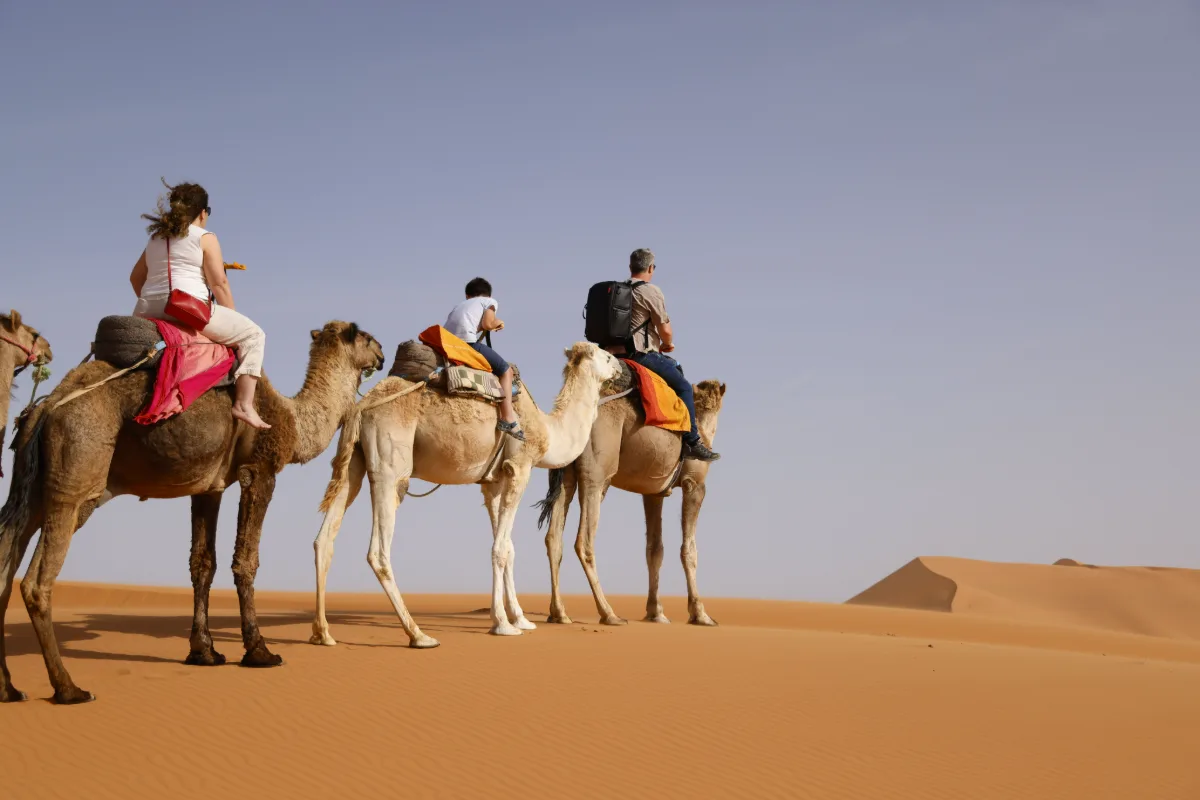
Dubai’s desert is often associated with speed: powerful 4x4s climbing dunes, engines roaring across the sand and packed itineraries that move from one activity to the next. But there’s another way to experience this landscape, and honestly, it can be just as memorable. Slow desert travel is about giving yourself time to notice what is around you, whether that means following a quiet walking route, watching wildlife, photographing changing light or learning more about the culture connected to the desert. You still get an adventure, just without the constant rush.
What Does Slow Travel in the Desert Actually Mean?
Slow travel doesn’t mean doing nothing. It simply means choosing experiences that give you time to connect with a place rather than quickly ticking attractions off a list. In Dubai’s desert, that could mean spending an hour photographing dune patterns instead of taking a few rushed pictures, joining a guided nature experience or sitting quietly as the sun disappears.
Think about it: when was the last time you visited somewhere and didn’t immediately think about what you had to see next?
A slower approach changes the mood. You become more curious about the landscape, and small details start to stand out.
Walk Instead of Always Riding
One of the simplest ways to slow down in the desert is to explore on foot. A peaceful walk across the dunes lets you experience the texture of the sand, changing elevations and the subtle signs of life that can easily be missed from a vehicle.
Walking on sand can be surprisingly demanding, so choose a route that matches your ability and the weather conditions. Early morning or cooler periods are generally more comfortable for outdoor exploration, while water, sun protection and suitable footwear should always be part of the plan.
For unfamiliar terrain, a knowledgeable guide can make the experience safer and more informative.
Look Closer at Desert Wildlife
The UAE desert may appear empty from a distance, but it supports a range of plants, birds, insects and animals that have adapted to its demanding environment. Wildlife-focused experiences encourage visitors to look beyond the obvious scenery and understand how these species survive.
You might notice tracks in the sand, birds moving between vegetation or small creatures hiding from the heat. Sometimes you won’t see an animal at all, and that’s perfectly fine. The signs are fascinating in their own way.
Keep a respectful distance from wildlife and avoid feeding or disturbing animals. The best kind of encounter is one where you observe without changing their behaviour.
Let Photography Slow You Down
Photography and slow travel work remarkably well together. The desert is constantly changing with the light, which means the same location can look completely different at sunrise, midday and sunset.
Rather than chasing the perfect postcard shot, try focusing on details. Photograph ripples in the sand, footprints, shadows along a dune or a single desert plant surrounded by open space. If you’re using your phone, experiment with different angles and compositions instead of relying on the usual wide landscape shot.
And don’t forget to put the camera away occasionally. Some views are better remembered than photographed.
Discover the Culture Behind the Landscape
The desert is not simply an empty stretch of sand waiting to be explored. It has deep cultural connections with life in the UAE, from traditional desert living and food to crafts, hospitality and knowledge of the natural environment.
Cultural experiences can make a desert trip feel much more meaningful, particularly when they are led by people who can explain the traditions and stories behind what you’re seeing.
Try local dishes, learn about traditional practices and ask questions. You don’t have to turn the experience into a history lesson. A few genuine conversations can add plenty of depth to a day outdoors.
Choose Conservation Over Convenience
A mindful desert experience should also consider the environment. Desert ecosystems can be delicate, even when the landscape appears tough and resilient.
Simple choices matter. Stay on designated routes where required, take rubbish with you, avoid disturbing wildlife and plants, and follow the rules of protected areas. If you’re booking an organised experience, look for operators that take environmental protection seriously and explain how their activities minimise their impact.
The goal isn’t to leave no trace because that can be unrealistic in every situation. The goal is to leave as little disruption as possible.
Make Room for Quiet
This might be the easiest part of slow desert travel and the one we often forget.
Put the phone away for ten minutes. Sit on a dune. Listen to the wind. Watch the colours change.
Dubai can be fast-paced, and that is part of its appeal, but the desert offers a completely different rhythm just beyond the city. You don’t always need music, conversation or another activity filling the silence.
Sometimes the quiet is the experience.
Plan a Low-Impact Desert Day
A mindful desert itinerary doesn’t have to be complicated. You could start with an early nature walk, spend some time photographing the landscape, enjoy a locally inspired breakfast, learn about desert culture and finish with a sunset viewing session.
If you want to stay longer, consider a suitable overnight experience that allows you to enjoy the landscape after dark and again the following morning.
The trick is to leave gaps between activities. Don’t schedule every minute.
That breathing room gives you flexibility when the weather changes, when you discover an interesting viewpoint or when you simply want to stay somewhere a little longer.
Why Slow Desert Travel Is Worth Trying
There’s nothing wrong with an adrenaline-filled desert safari. For many people, it’s the perfect introduction to Dubai’s dunes. But if you’ve already experienced the thrill of dune bashing, slowing things down can reveal another side of the landscape.
You start noticing the details. You learn more about wildlife. You understand the connection between the desert and local culture. You take photographs with more patience, walk with more awareness and perhaps leave with a stronger appreciation for the environment.
That’s the charm of a mindful desert escape. You don’t need to see everything. You just need enough time to actually see what’s in front of you.
